BOLIVAR HISTORY
Almost one century after the death of Simon Bolivar, a Spaniard entrepreneur, settled in Havana was registered with the name of a distinguished Venezuelan, or a brand of Havana Cigars that today are considered among those of bigger demand, particularly in Great Britain. The reasons that moved Jose Fernandez Roche to register in 1927 the name of Bolivar for Havana Cigars are not exactly known, because as a Spaniard, his admiration for “The Liberator” could be doubtful. But in commercial terms, no doubt he could a very welcomed name, especially in England. Other sources locate the registration of the Cuban Cigar brand in 1921 and they believe that Bolivar’s Cigars started to be produced two decades before. In one way or another, this brand acquired special relevance from 1944,when it is acquired by the Gloria Cubana by the company Cifuentes & Cia., owner of Partagas at that time.
Initially, the Cuban Cigars of the brand Bolivar were produced in a factory of the street San Miguel, number 961, of Havana and starting from the acquisition by Cifuentes & Cia., they become part of the group of brands produced in the Factory of Industry number 520.
COHIBA HISTORY
Born by chance, this is the first brand of Cuban Cigars created after the revolution, i.e., created by the governmental Cuban industry starting from 1960. The first Cohiba Cigars, today known as “Lanceros”, were made in 1963 by a twister called Eduardo Rivera (today a tobacco entrepreneur in Hong Kong) who offered them to a Fidel Castro security guard, and this person to the Commandant, who not only smoked them but also started to use them for personal gifts. Until 1966 they did not have a defined name and the denomination of the brand with “Cohiba” was personally influenced by Celia Sanchez.
Until 1969, the first habilitation and the first ring were designed. However, when Cohiba Cigars appeared in 1982, finally it also appeared in the markets, already the most coveted Cuban cigar in the world.
The first brand of Havana Cigars brings stories full of mystery, magic and pleasure because when the Great Admiral comes to Cuban lands in 1492, the settlers of the island already used tobacco and named Cohiba the rolls of leaves which smoke they breathed in.
The trade of the Cohiba Cigars started in 1982 with “Lancero” band as letter of introduction accompanied of Special Crowns and of the panetelas. With time, Cohiba introduced new bands in the market: Esplendido, Robusto and Exquisite. Finally, five centuries after arrival of Christopher Columbus to Cuba and as celebration of the fifth centennial of the encounter of the two cultures, five bands of Singular Havana Cigar appeared: one for each passed century.
Last year, finally it appeared the cigar that represented the new 21st Century and 6th Century better known as the Cañonazo.
Cohiba is not produced in big quantities because it is very selected Cuban Cigar, very limited due to the quality of the harvest and the quantity of first quality raw material. This makes Cohiba to stay at the top and it continues the maximum one: The Havana Cigar that everyone wishes to smoke.
CUABA HISTORY
The Corporation Habanos S.A., launched the brand Cuaba for first time on November 19th, 1996, in London. This new brand, that remembers the spirit of ends of last century, first showed four bands conceived thinking in the smoker loving the exquisiteness of the antique.
The name Cuaba contains a very old history. This word comes from Tainos indigenous people from Cuba and it describes an autochthonous bush of the island of excellent combustibility that still grows in the country. It was used a lot as torch by the first settlers and it was used specially to light cigars or Cohibas during magic and religious ceremonies. The first historical testimony of the existence of the Cuaba comes from 16th Century and it is attributed to the Spaniard Jesuit Fray Bernabe Cobo.
Today, the Cuaba Cuban Cigars, turned into tradition, has reached until to present days and even today it is possible to see Cuban country men frequently using a branch of Cuaba to light their fire or light when they walk in the middle of the lands at dark night. “Burning as a Cuaba” is a popular say that has passed from one generation to another, because combustibility is one of the main characteristics of this bush. And this also been the reason for which this name was chosen for the new cigar brand.
DIPLOMATICOS HISTORY
The brand Diplomaticos was introduced in 1966 as a cheaper version of those of Montecristo cigars addressed to French market. However, due to the scarce volume of production of this brand of Havana Cigars, today it is not only quoted at the same price as Montecristo’s but also is a brand that is sought by Cuban cigars amateurs and at certain level they are difficult to find.
EL REY DEL MUNDO HISTORY
The history of this singular brand goes back to 1848 when the Spaniard Antonio Allones settled in Havana, in the business of tobacco. Only four decades later, in 1982, Antonio Allones, turned into an important tobacco man. He registered a very special Cuban cigar, made with leaves of Vuelta Abajo, which he distinguished with a very pompous name: The King of the World. Truly, the quality and the habilitation of this Havana Cigar would make it to deserve this name.
“El Rey del Mundo” is elaborated fully fledged. That is what the smokers of Havana luxury saloons said while enjoying a delicious cigar. But, Allones continued with his effort to improve and consolidate his Cuban Cigar as the real King of the World.
In 1905, Allones transferred his company to the Partnership Diaz & Hermanos, mercantile initiative that did not have a relevant incidence for the well known quality and good gained fame of El Rey del Mundo. The Company Diaz & Hermanos, later, turned into Rey del Mundo Cigar Co., and moved to a more modern building located on Padre Varela Street(presently Belascoain), number 852, address where there is now one of the biggest factories of twisted tobacco of Cuba, Romeo y Julieta, being El Rey del Mundo one of the most prestigious Cuban Cigar brands made there.
Presently, and following the desire of its founder, El Rey del Mundo is between the most well-known and coveted Havana Cigar among experienced smokers, specially the Tainos band that should not be missing in the cava of a collector.
FONSECA HISTORY
It was a Spaniard, Don Francisco Fonseca who registered the brand in 1907; it registered the brand with his own surname with domicile in Dragones Street, number 39, of Havana. Just 3 years later, he decided the transfer of the company to a new building in Galiano Street, number 102. When Don Francisco Fonseca died in 1930, the brand was having its best time. His widower, Dona Teresa Boetticher, continued at front of the prosperous cigar business.
Finally, Teresa Boetticher decided to join Fonseca brand to T. Castaneda Ig. Montero Workshops. This union lead to constitute the firm Castaneda, Montero, Fonseca, S.A., on Galiano Street, number 466. Presently, the Fonseca’s manufacturing takes place in a factory of tobaccos placed in Quivican, picturesque small town of Havana province.
GLORIA CUBANA HISTORY
La Gloria Cubana was created in 1885 by the Company Cabanas & Castro; it did not delay to gain prestige between good cigar smokers thanks to its well-made Havana Cuban Cigars of excellent scent, strength and taste.
From the very beginning, the factory was in the Street Corrales, number 53, in Havana. In 1905, La Gloria Cubana was acquired by Jose F. Rocha & Cia., and the factory was transferred to the number 364 of San Miguel Street. At that time, Switzerland and Belgium were the countries that acquired most production of these Cuban Cigars.
At the middle of the century, La Gloria Cubana turned into property of the Cifuentes family, owner of the famous brand of Havana Cigars Partagas. Ramon and Rafael Cifuentes,Ramon was in charge of all productive process in Partagas and Rafael second in charge of the administrative businesses they put a big effort to keep the traditional quality and the market of La Gloria Cubana, that soon was added to the group of brands produced in Partagas and also he developed a line of his own called “Medaille D`Or”, of beautiful presence and great quality Cuban cigar.
La Gloria Cubana preserves all this appreciable tradition today and its banding comes apart of the those traditional that share almost all brands, not only due to their formats, but also for the exclusive packing on cigar boxes that made the Series “Medaille D`Or” a referent of the brand.
H.UPMANN HISTORY
On October 15th, 1844, the smokers had news for first time, about all times most prestigious brand of Cuban Cigars which fame has been a great deal over passed even further than those expectations the creators, Brothers Hermann and August Upmann ever dreamt of.
The Upmann’s from German origin, established in Havana, in 1843 and waited to be called by the fortune. Finally, the encounter with luck came when they embraced the tobacco business. In this way, the tobacco company H. Upmann opened on San Miguel Street, number 75 of Havana. They decided on the suggestive name starting from letter H, coming from brothers (in Spanish) and the German last name H.Upmann, which had the H taken away in over to avoid unnecessary repetition. While Hermann and August made the factory to succeed (it was honored for its quality and growth and they extended the factory in 1845 with a new workshop, the “Flor del Pacifico”, in partnership with their the fellow-country man, Enrique Claufsen), the nephews of Hermann; Albert and German founded a commercial bank, in the Cuban capital city, to which H. Upmann entered as a partner. With the pass of the time and in view of the continuous growth of the firm, it was necessary to have a bigger building, able to lodge more than 200 tobacco farmers that worked, at that time, for another company. This initiative finished in 1891 and H.Upmann came to a new property in Avenida Carlos III.
Around twenties in the 20th Century, the fortune passed to the English Company, Frankau, S.A., in 1922, which, in a fast operation, it leased it to a partnership made of Spaniards Jose Salaun and Francisco Fernandez and the German Paolo Meller. In 1936, Frankau S.A., ended this leasing contract and sold the factory to the Company Menendez Garcia & Cia. The new owners dedicated efforts and capital to recover the brand H. Upmann. Soon H. Upmann recovered its splendor.
In 1944, on occasion of the centennial of the firm’s foundation, the factory was moved to the Amistad, number 407. Recently, a new factory, totally renewed, was opened on Street 23rd, corner on Street 14th in the factory of cigars Partagas. Today, H. Upmann is the headquarters of the prestigious Montecristo, Diplomaticos and the founding brand of the firm, H. Upmann. All of them are tobaccos of great quality and attractive presence in any of its big group of bands.
HOYO DE MONTERREY HISTORY
In 1844, Jose Gener came to Cuba wishing to make fortune. He came from Arbos (Tarragona), a land where people talked of and far away Cuba’s good cigars were well known. He was burning of impatience to go further in the world of tobacco plantations and tobacco itself. Jose Gener did not delay to know Vuelta Abajo closely.
In 1860, he acquired Hoyo de Monterrey’s estate, in San Juan and Martinez, in the famous area of Vuelta Abajo, but it was up to 1884 when he registers the maker of Havana Cuban Cigars that carries the name of the famous plantation: Hoyo de Monterrey.
At the beginning, Gener elaborated this cigar in the factory deeply-rooted in number 7 of the street Principe Alfonso (today called Calzada de Monte), in the center of the capital. The cigars of the brand “La Excepcion” were already produced since 1865, registered in this way by the capricious Gener. So much Hoyo de Monterrey as La Excepcion turned into two brands of excellent quality, beautiful presence and good markets during that time.
In 1895, Jose Gener goes to Spain and come back again to Cuba. After his death in 1900, his daughter, Lutgarda Gener Seycher takes over all businesses of her father, particularly the brand Hoyo de Monterrey.
The prestigious Havana cigar belonged to Gener’s descendants up to 1931, when it was transferred to the Partnership Fernandez & Palacio, owner up to 1948, when Ramon Fernandez died. His partner, Don Fernando Palacio acquired the full company and created the firm “Fernando Palacio & Cia. S.A.”.
As they were from the day, Hoyo de Monterrey is still being hand twisted with selected leaves of famous tobacco plantations of San Juan and Martinez, in the province of Pinar del Rio.
JUAN LOPEZ HISTORY
A Spaniard, Juan Lopez Diaz, founded in 1876 the Cuban Cigar factory of his name Flor de Juan Lopez. In 1884, he registered, among other brands, La Veneciana, El Marquez de Caixas, La Mandolineta y Transcontinental. Then, he launched other five cigar brands, but none of them was capable to compete with the one bringing the name of its founder. Juan Lopez died at the beginning of 20th Century, but the maker continued its success line in a way that in 1911, Flor de Juan Lopez, received the Big Prize ion the National Exposition of Cuba. Few years later, it was by the entrepreneurs Cosme del Peso Perez and Abelardo Gonzalez Herrera, carrying, so far, the registration ring “C. de Peso y Cia.”. In the decade of 30’s the factory was transfer to the little town of Guira de Melena, where it continued being elaborated.
MONTECRISTO HISTORY
Almost one century later, after “El Conde de Montecristo” saw the light, a visionary Asturian created and registered a brand of Havana Cuban Cigars with the name of a novel in Cuba. People tell that this was one the preferred readings of the twisters in the factories, the reader was asked for a character that has been kept up today in charge of reading for the twisters while they work, in a way to make their work more enjoyable. Today they read the press, but at the beginning of the century, the use was the reading of novels, especially adventures. In this way is how the idea of the brand originated, as a tribute to the workers and to Alejandro Dumas.
Montecristo, thanks to its incomparable scent, taste and strength, with the pass of the time, and with no expectations, it almost has surpassed the fame of the novel itself.
Alonso Menendez, an Asturian, started in Cuba the business of tobacco in well advance first half of this century. However, most of his experience was acquired in the United States, in tobacco plantations of Florida. After coming back to Cuba in 1935, Menendez associated to Jose Garcia, another Asturian linked to the world of tobacco. Thus, in this way, the company Menendez, Garcia & Cia started.
The magnificent company put capital and efforts in the development of the brand Particulares. This effort was shortly crowned with success and Particulares cigars took a very outstanding position among most famous cigars of the time. While all tenacity and money were addressed to Particulares, Montecristo brand, created in 1935, expected best times. It was luck of Ugly Ducky that soon would rise radiant as a Swan.
And the time for Montecristo arrived. In 1936, Alonso Menendez sold Particulares to Cifuentes & Cia., the powerful owner of Partagas brand. Using the benefits obtained, the bright Asturian acquired the factory H. Upmann that was not passing a good time. He modernized the factory, encourage the twisters and very soon he could recover the H.Upmann’s splendor of other times. It was at that time when Alonso Menendez decided to go on full with the brand Montecristo. The design of the rooms, the propaganda and the quality of the bond were important elements that contributed to empower this brand that slowly overpasses initial expectations.
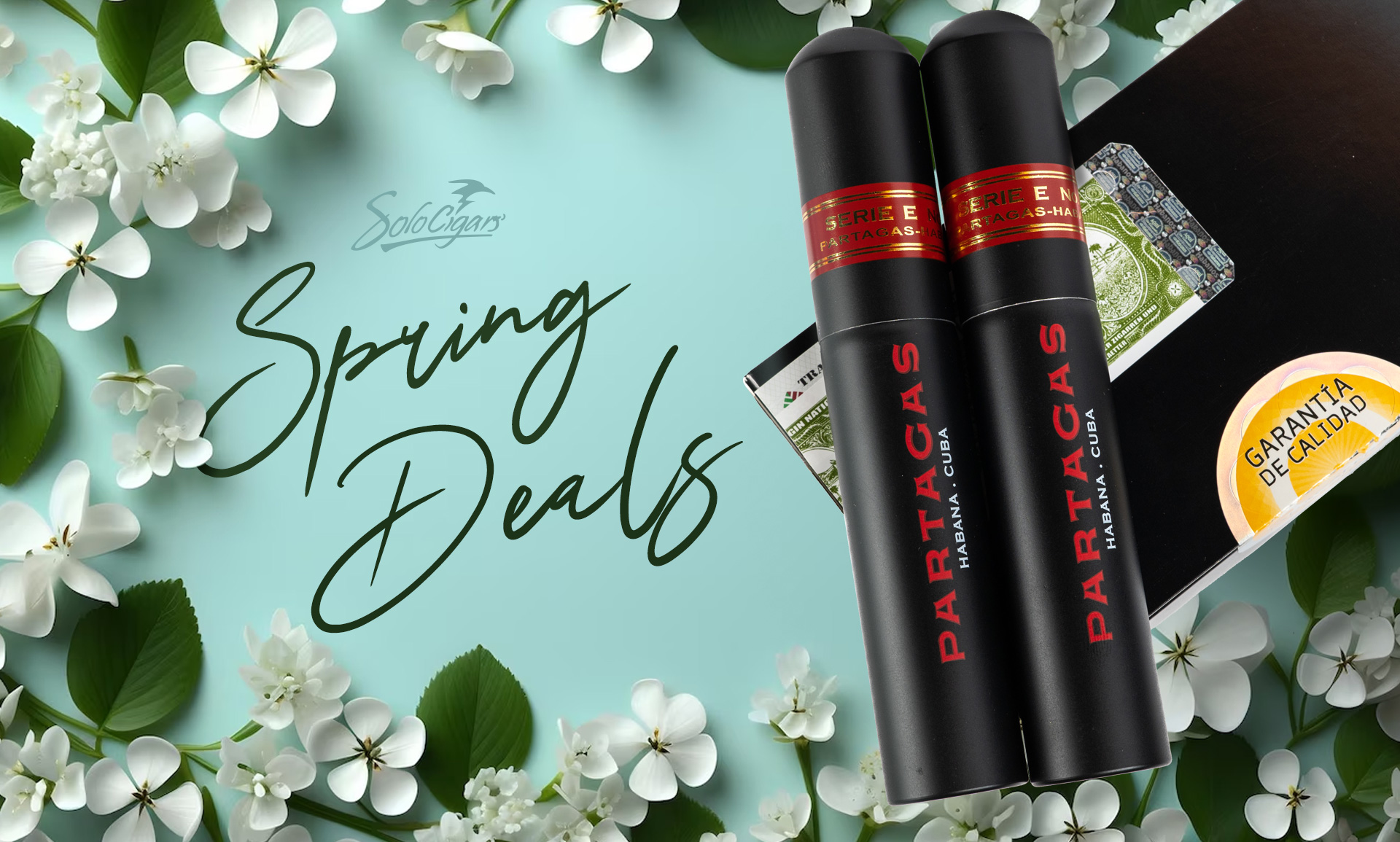
PARTAGAS HISTORY
Advanced the first half of 19th Century in the in the Havana a Catalan entrepreneur foresaw promising business results in the business of hand twisted cigar elaboration. After the first years passed with acceptable dividends, in 1845, Don Jaime Partagas gave his name to a new brand of Havana Cuban Cigars that did not take time to reach a singular celebrity. The Real Factory of Tobaccos Partagas opened the doors in the number 520 of Industria Street of Havana.
Don Jaime Partagas was a passionate man, particularly for female beauty. Owner of tobacco plantations Vuelta Abajo, he frequently visited his plantations with the goal of following the progresses, but also anxious to enjoy certain affairs. Over there, in Vuelta Abajo, he enraptured in front of the voluptuousness of the smoke of magnificent Cuban cigars and he fully enjoyed fervent women of the color of the Havana Cigars. Affairs, jealousy and revenge are related to the murder of Don Jaime, found dead in a mountain under mysterious circumstances, in one of his plantations.
After the death of the vigorous Catalan, his descendants continued his work. Later, the factory passed, half sale, to Jose A. Bances and Ramon Cifuentes. Starting from that moment and with the elapse of the time, the factory had different owners: Bances sold his rights to Cifuentes, who goes into a partnership with another man called Fernandez. Finally, Cifuentes joins Francisco Pego Pita.
After the death of Pego Pita, in 1940, Cifuentes makes the partnership Cifuentes & Cia. At that time the factory produced around 30 different cigar brands.
The revolutionary triumph did not lower down the prestige and quality of Partagas’ labor; it rather contributed to the opening of new markets and to the enrichment of the plantation. Today, the Real Factory of Tobaccos Partagas continues with a building of a high pillars and solid walls with selected twisters that continue elaborating, in a neat way, excellent Havana Cigars as during Don Jaime’s time
POR LARRAÑAGA HISTORY
In a date that is so early for the history of twisted tobacco on hands of Cuba, such as year 1834, a Spaniard named Ignacio Larrañaga founded the brand Por Larrañaga, which after more than half century comes to out times with a good defined fame of good quality Cuban cigars factory.
Por Larrañaga was seated in different addresses of Havana. It started in O`Relly Street, number 94, it was in Carlos III, number 713, corner of Arbol Seco.
PUNCH HISTORY
The brand Punch was founded in 1840, in Havana, by Don Manuel Lopez, property of J. Valle & Cia., having the Britain cigar market in mind. At that time, the humor magazine of the same name was in vogue in United Kingdom which character is still appears today, with a Cuban cigar in hand, in his abilities.
At that time, the capital of Cuba was witnessing times of big prosperity for hand twisted cigars; small factories were abundant, the expansion of big tobacco companies started and managers openly went to what seemed to be a business with magnificent future.
At the time, the Punch elaboration was carried out in the factory of Luis Corujo & Cia., then, by occasion of the change of the owner, the twisting of this Havana Cigar took place in other factories.Finally, the brand Punch come to be property of the firm Fernando Palacio & Cia., in Monterrey and La Escepcion, founded by Jose Gener in 1865, as well as Belinda, created by Francisco Menendez in 1882.
All brands of the company were twisted by hand in the factory located in Monte and Zulueta streets.
Punch Cigars has good acceptation between smokers and very soon it started to be considered in the markets as a Cuban Cigar of unquestionable quality.
Those were years of great splendor for the brand, mainly exported to Great Britain where it was very popular. This remarkable Punch’s acceptation among Britons made Sir Winston Churchill not to escape from the wish of coming to the factory of Monte and Zulueta during a visit to Havana. The British Politician unrepentant Cuban Cigars smoker ended giving his name to a band of that name.
Presently, the brand Punch, in its different bands, outstands among the best Cuban cigars of best quality and presentation.
QUAI D´ORSAI HISTORY
Quai d`Orsay was created especially for Gallic Cigar market thank to efforts of SEITA that chose the name of one of most acknowledge avenues of Paris: Quai d`Orsay. Here is the Internal Affairs Ministry, the Central Offices of SEITA and the Museum of Gare d`Orsay. The brand Quai d`Orsay today belongs to Habanos.
RAFAEL GONZALEZ HISTORY
Flor de Rafael Gonzalez Marquez, one of the most selected Cuban Cigars that are known, held just in 1996 its 60th anniversary. The first references known of this brand come from 1936. This year, and holding the name “La Flor de Marquez”, the brand was registered by the owners of the Partnership Rey del Mundo Cigar Company, of Havana city.
There exist two stories related to the origin of the name. One is linked to the presence of the Marques Rafael Gonzalez who dedicated to tobacco business in la Havana. The other one mentions Marquez and Rafael Gonzalez, two Spaniard manufacturers settled in Vuelta Abajo, who baptized their Cuban Cigars with the names of “La Flor de Marquez” and “La Flor de Rafael Gonzalez”. The truth, as it is certified in the official registry, is that “La Flor de Marquez” dates from 1936, while “La Flor de Rafael Gonzalez” was created in 1946. Finally, in 1954, the two original brands turned into “Flor de Rafael Gonzalez Marquez”, which is the name of the cigar brand known worldwide.
RAMON ALLONES HISTORY
In a so early date for the history of the Cuban Cigars as 1845, Ramon Allones registered the maker that brings his name. At the first times, the elaboration of this cigar was carried out in Animas Street, number 129 of Havana.
Allones was a Spaniard of fresh ideas. He was the first that introduced boxes of 25 tobaccos in different dimensions. Today, these containers of cedar are irreplaceable to preserve and trade the tobacco (the bunch of 25 cigars have the name of fortieth and the 50 cigars the name of twentieth).
The brand Ramon Allones went to hands of different owners, but in 1927 it was acquired by the firm Cifuentes, Pego & Cia., later owner of the well-known brand Partagas, located on Industria Street, number 520. In the 40’s, hand twisted tobaccos elaborated by hand and acquired by Canadian and people from USA were added to the traditional production of cigars twisted at hand sent mainly to the British Cigar market. Tobacco managers from United States, sold those cigars to the army, especially to those located in the Far East.
Now, the brand Ramon Allones appears among the most appreciated ones and as it happened before, the main destination of its big bands is Great Britain.
ROMEO Y JULIETA HISTORY
The history of one of the most famous Cuban Cigar apparently starts in some impossible love. Such is the singular legend that surrounds the birth of Romeo y Julieta. The creator of this Havana Cigar twisted from the first day with leaves form Vuelta Abajo, in 1897 was the Spaniard Don Inocencio Alvarez, who transferred the property to the Partnership Rodriguez Arguelles & Cia. Don Pepin, as Jose Rodriguez was known, was a happy and talkative man and the person who made this brand famous, a noble effort supported by many friends coming from Havana with desire to work. In 1903, the Partnership Rodriguez Arguelles & Cia. was dissolved and the Romeo y Julieta Tobacco Factory is created.
In 1904, Romeo y Julieta is installed in a new building in Belascoain and Virtudes, in the center of the capital city. At that time, the gross portion of the production of this excellent Cuban cigar was sent to the Spanish market, although the brand enjoyed of a good reputation in United States and Great Britain. By that time, the factory elaborated with big success “Maria Guerrero” and “Don Pepin”, cigars that rendered a warm tribute to the beautiful Spaniard actress and to the creator of Romeo y Julieta.
At the dead of Don Pepin, in 1935, his nephew, Hipolito Garcia Rodriguez, follows him at the front of the company, a hard-working man that knew how keep the prosperity of the factory and the quality of the Havana Cuban Cigars. Presently the elaboration of Romeo y Julieta is carried out in a building that is very well furnished in Belascoain and Pe?alver, not far away from the original building, and as in Don Pepin times, this Cuban Cigar of original bond still continues being elaborated with the best leaves of Vuelta Abajo.
SAINT LUIS REY HISTORY
In 1940, this brand appeared registered in the name of Zamora and Guerra in Maximo Gomez Street, number 810. Today it is located in Belascoain, number 852, where Romeo & Juliet are also located. It was created exclusively for the English Cigar market and it was distributed in United Kingdom by the firm N.R. Silverstone Cigars Ltd., which preserve such exclusivity up to 1990.
SAN CRISTOBAL
On December 16th, 1999, date of the 480th anniversary of Havana foundation and by occasion of the Ibero American Summit held in this city, the introduction of the brand San Cristobal de La Habana took place. This brand was created to celebrate the name of D. Panfilo de Narvaez who with the pass of the time would become the capital of Cuban island and the world of cigars. Elaborated in the factory of La Corona, the bond has been made by the tobacco man Felix Jimenez, technical sub-director of the factory and the tasting of it took place on September 24th, getting authorization for the four bands it is trading with.
As it was already said, it is a maker of recent history, and of which very little can be added, the relevance of its name has made that so much the Corporacion Habanos as the factory La Corona had make special effort to take care of its quality.
SANCHO PANZA HISTORY
This is the brand that appears registered for first time in 1848, in the name of Don Emilio Ohmsted, in Angeles Street, number 48, in the city of Havana. Then, during the 80’s, in 19th Century, the factory was acquired by Ramon Allones who kept its habilitations and traditional cigar quality. Later, in 1940, in the past century, the brand is registered in the name of Rey del Mundo Cigar Co.
TRINIDAD
During the celebration of the 1st Havana Cigar Festival in February, 1998, the introduction of the first band of this brand took place with the name of Fundadores. Waiting for all big lovers of Cuban Cigars, Trinidad has been the Havana Cigar that the government of Cuba offered as gift of state during years. The trade of it and its integration to the banding was decided on that date, as well as one of its presentations: boxes containing 24 units different from any other band elaborated in Cuba. In 2003, the introduction of three new bands of the brand took place and this launching was also used to redesign the ring.
VEGAS ROBAINA
The brand brings the name of the property of one of the best tobacco harvesters in Cuba, Don Alejandro Robaina, who comes from a family of planters established in the region of the tobacco mass of San Luis, perimeter of Cuchillas, Barbacoa, at the middle of last century. This place has the best and finest plantations for layer of the Vuelta Abajo region. His father, Don Maruto Robaina, was also considered the best harvester of the country. In 1950, Don Alejandro takes charge of these plantations that have produced important amounts of layer for elaboration of Havana Cuban Cigars today and before. Approximately, 30 per cent of the exportable layer produced by Pinar de Rio province comes from Vegas Robaina, which makes an authentic legend of it in the tobacco industry world. This brand is the acknowledgement to the work of farmers from Vuelta Abajo and especially to the one that gives the name due to the achievements reached in the last years
Limited Editions
The "Limited Edition" originally made its appearance in 2001 with the launch of the Partagas Piramides - still regarded by some as one of the best cigars to date. Characterized by a specially prepared and aged dark Maduro wrapper the cuban cigars sported a unique gold and black band with the year of production. The fermentation for the partagas piramide limited edition cigars also serves to impart approximately 10% more strength to the cuban cigar as indicated by the "toasted" taste of the tobacco.
The process that complete the flavor of any limited edition is very much an ongoing experiment conducted by agronomists expecialized - the agricultural production division responsible for the cultivation of tobacco leaf in Cuba. Each year since 2001 Limited Edition cuban cigars have been produced in selected marques. Once these prestigious and rare cuban cigars have been distributed and sold Worldwide they pass into the annals of cigar history. Inevitably the more popular cuban cigars specially created within this format will appreciate in value by virtue of scarcity alone.